
The carton lands on a Tuesday. Twelve hundred fibers, twelve hundred pouches, a packing list, and — if someone remembered — a datasheet attached to a quotation six weeks ago and revised twice since. You have a receiving bay, a purchase order, and twenty minutes before the pallet has to move.
The instinct is to treat the job as detection: open a few, look at them, decide whether this is a good shipment.
That instinct is wrong, and it can be shown wrong with arithmetic rather than philosophy. Acceptance sampling will not detect much of anything at the defect rates that matter, and the regulation you are trying to satisfy never asked it to.
What the regulation actually asks for
21 CFR 820.80(b) is one sentence of requirement and one of consequence. Incoming product shall be inspected, tested, or otherwise verified as conforming to specified requirements. Acceptance or rejection shall be documented.
The detail lives in the documentation clause. §820.80(e) lists what a receiving record must contain: the acceptance activities performed, the dates, the results, the signature of the person who conducted them, and — where appropriate — the equipment used. Then it adds where those records live. They are part of the device history record.
Notice what is not on that list. There is no field for a conclusion about the lot. The regulation does not ask you to certify that a shipment is good. It asks you to be able to show, years later, what you did, when, with what instrument, and who signed for it.
That rearranges the job. Incoming inspection is not a filter separating good lots from bad ones. It is the moment a shipment acquires an evidentiary record, and it is the record — not the sample size — that an auditor will eventually examine.
ISO 13485:2016 §7.4.3 supplies the other half. The extent of verification has to be based on the results of supplier evaluation and proportionate to the risks associated with the purchased product. That cuts both ways. A supplier with three clean years behind them shipping non-sterile bench fiber does not need the same plan as a first shipment of terminally sterilized single-use devices. Writing “sample per AQL 1.0” once and applying it to everything is not proportionality. It is a number that happens to be written down.
The arithmetic that belongs on the SOP
Most receiving procedures name a sampling plan without ever showing what the plan does. The omission matters, because the behavior is counter-intuitive exactly where fiber lots live.
Take a lot of 1,200 fibers — the bracket that ISO 2859-1 and ANSI/ASQ Z1.4 assign sample-size code letter J. At general inspection level II that letter gives a sample of 80 units. Accept and reject numbers then depend on the AQL.
Three plans, same lot. The plan parameters come from the standard; the probabilities are our own calculation from the binomial distribution, which is the basis the standard itself uses.
| Plan for a 1,200-unit lot | Accept on | Lot at 1% bad | at 2.5% bad | at 5% bad | Quality needed for 95% acceptance | LTPD (10% acceptance) |
| Z1.4, AQL 1.0 | 80 2 | 95.3% | 67.7% | 23.1% | ≤ 1.03% | 6.5% |
| Z1.4, AQL 2.5 | 80 5 | ~100% | 98.5% | 78.9% | ≤ 3.32% | 11.3% |
| Zero-acceptance, Ac = 0 | 34 0 | 71.1% | 42.3% | 17.5% | ≤ 0.15% | 6.5% |
Two rows deserve a second reading.
The first is the middle one. An AQL 2.5 plan with an accept number of five will accept roughly four out of five lots running at 5% defective. If the characteristic being counted is a seal channel, that should be uncomfortable: it describes a plan that releases a shipment in which one fiber in twenty carries the defect that produced a Class 2 recall.
The second is the last row, and it is the most useful comparison here. The zero-acceptance plan and the AQL 1.0 plan have, for practical purposes, identical protection against a catastrophe — their LTPDs are 6.5% and 6.5%. Against a merely mediocre lot they are not the same plan at all. AQL 1.0 needs a process at or below about 1% to give 95% acceptance; zero-acceptance needs about 0.15%. That is a factor of nearly seven, bought with a sample less than half the size.
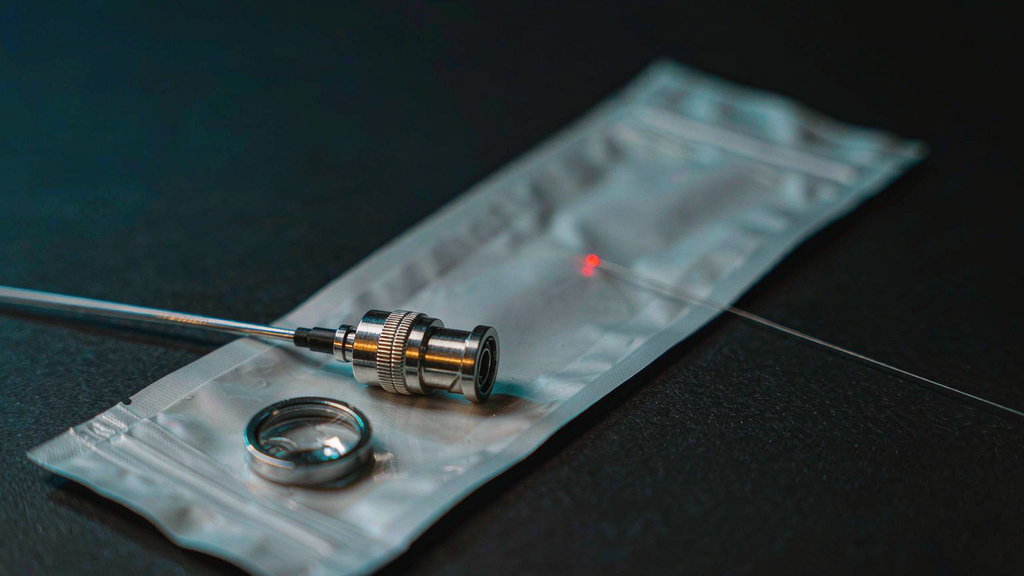
The reason is in the names. AQL-indexed plans are built around the acceptable end of the operating characteristic curve — the sample is sized to give the producer a high chance of passing a lot genuinely at the AQL. The zero-acceptance plans developed by Nicholas Squeglia are indexed by AQL only for comparability; they are matched to the corresponding Z1.4 plan at the rejectable end, and always accept on zero. Both approaches are legitimate. Writing “AQL 1.0” on a form without knowing which end of the curve you bought is not.
Neither plan is built for noticing a specific bad unit. That distinction decides how the seven points get weighted.
Why a sampled lot cannot be trusted to reveal a breached pouch
A sampling plan answers “if this lot is p percent defective, will I accept it?” It does not answer “will I notice the bad one?” The gap between those questions is wider than most people expect.
Consider a single fiber whose pouch seal is breached — one unit in a lot of 1,200. A sample of 80 gives that unit a 6.7% chance of being in the sample. Not a 6.7% chance of being caught. A 6.7% chance of being looked at, and a 93.3% chance of staying in the carton. With twelve breached units — 1% — the sample contains at least one of them 56% of the time. With six units, a third of the time.
Then multiply again, because the visual check is not perfect either. The scope of the visual seal-inspection method allows that a channel around 75 µm wide is found with a probability somewhere between 60% and 100%. Combine the two for the 1% case — seen in the sample 56% of the time, caught by the eye perhaps 60% of the time — and the procedure has about a one-in-three chance of finding what it was looking for.
Now put the recall record beside those numbers. FDA Class 2 recall Z-0718-2024 concerned Olympus SOLTIVE SuperPulsed Laser Fibers, model TFL-FBX200BS, UDI-DI 00821925043985, lot KR262848, 179 units, initiated 4 December 2023. The reason was a potentially breached sterile pouch seal. The consequences were minor procedure delays if noticed before use, and patient infections if not. The remedy was not “increase your sampling.” It was: identify and quarantine the affected model and lot.
That is the shape of the answer. A defect class effectively invisible at a sample of 80 is also one that a lot-level action handles better than an inspection plan — and the lot-level action only exists because the manufacturer could name the lot. Your half of that exchange is keeping the lot identity intact on receipt, which is point 1.
Point 0: find the paper before you open the carton
The seven-point check starts at zero, and it has to, because the other six have no meaning without it.
To reject a shipment you need a criterion, and a criterion has to be written down before the shipment arrives. ISO 13485 §7.4.2 says what purchasing information must describe or reference, and item (b) is requirements for product acceptance. It then adds that the organization must ensure the adequacy of those requirements prior to their communication to the supplier.
Read plainly: the acceptance criteria for your fiber belong in the purchase order or in a drawing the PO references — not in a datasheet that arrived with the goods, and not in a standard neither party signed.
This is not a paperwork ritual. There is no general product standard covering a 200–1000 µm all-silica energy delivery fiber. IEC 60793-2-10, which sets product-level limits for A1-class multimode fiber — proof stress, tensile strength, coating strip force — does not extend to the large-core laser fibers in this product family. And the IEC 60793-1-xx series tells you how to measure attenuation, numerical aperture or coating geometry; it does not tell you what value is acceptable for your application.
So the acceptance value is whatever you and the supplier agreed. If that agreement never reached paper, you do not have a lot that fails inspection. You have a lot with no inspection criterion, and the conversation that follows will be about goodwill rather than conformance. Our own downloads library is organized by document type rather than by product, which is deliberate — a datasheet, an instruction for use and an OEM capability pack are three kinds of paper with three audiences, and treating them as one folder is how the wrong one ends up quoted in a receiving record. Our customization process starts from the same place, from your drawing rather than a catalogue, because the drawing is the only place an acceptance value can live.